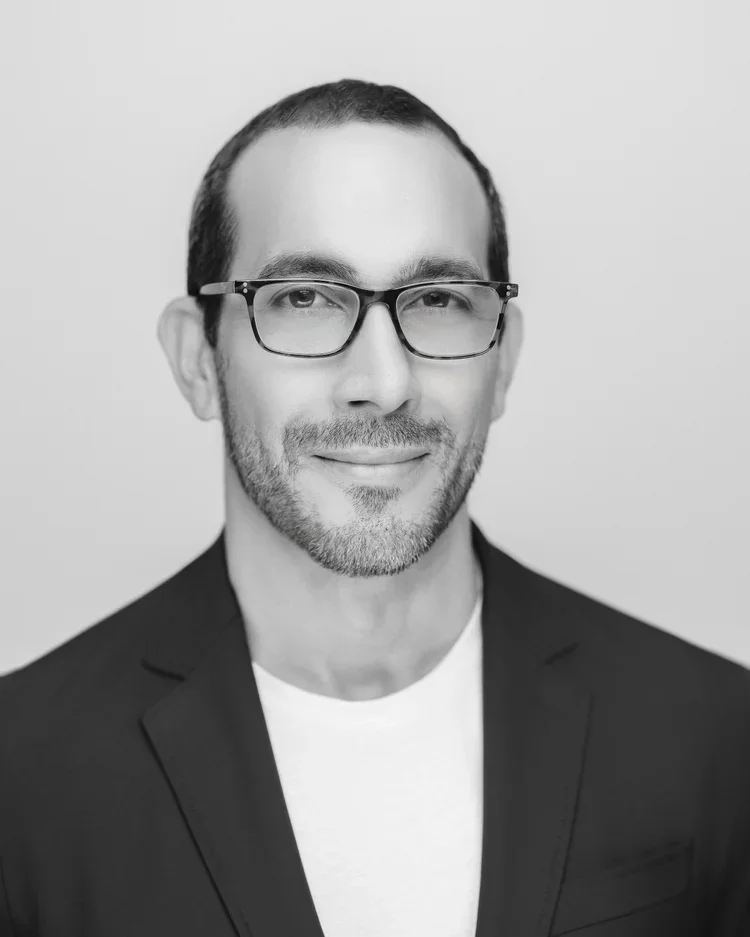
The first in a series about running Petal. This one is about how I got here, and how small things shape what people see.

The morning of the most important interview of my career, I knocked out my front tooth with a barbell.
The interview
Petal had put out an ad for a new head designer. Fairly standard. I had just left a head designer position at a company where I wasn't happy, so I applied and got called in. I was excited. Petal had really good bones. It just needed a bit of a glow-up, and I thought it was a place where I could be of service.
That morning I went to my CrossFit class, like always. During power cleans, I smacked my mouth with the bar and knocked out one of my front teeth.
Pure panic. I called my dentist for an emergency fix. He was on vacation in Japan. I started calling random dentists. Nobody could get me in.
So I convinced myself that if I kept my lips tight and never smiled, maybe, just maybe, they wouldn't notice. I walked into the interview with my front tooth missing. And, like an idiot, I never mentioned it. I spent the entire interview talking like Heath Ledger in Brokeback Mountain.
The interview went about as well as it could have. Not surprisingly, I didn't get a call back.
What I got wrong
It wasn't the tooth. Anyone would understand a CrossFit accident. What's harder to understand is a candidate who seems to be hiding something.
I spent that whole interview managing my mouth instead of talking about what I could do for Petal. I made myself small. And in a room where you're trying to convince someone you can create glamour, small is the one thing you can't be.
Glamour is presence, not perfection. By trying to hide, I walked into that room without any.
The same thing happens at every event
Our whole business runs on this. Nobody remembers the 400 perfect centerpieces. They remember the one wilted stem on the head table, the linen that's a shade off, the truck that pulls up twenty minutes late while the planner watches. Luxury is a perception, and perception is built out of details nobody notices until one of them goes wrong.
My instinct, even now, is still to hide it and fix it. Partly because I don't want to cause the planner undue stress. If they haven't noticed the mistake, I'm going to move fast and fix it before they ever do.
But if they have noticed, the worst thing I can do is carry on as if nothing is wrong, even while I'm fixing it. That's exactly what I did in that interview. Everyone in the room could see the tooth. I just pretended they couldn't. Once someone has seen the flaw, it's rarely the flaw that does the damage. It's the pretending.
So in those moments, I put on my big boy pants and walk into what's hopefully not too uncomfortable a conversation. I name the issue, and I bring the solution with me.
The second chance
About a month after the interview, I was freelancing for another florist, Israel Sands, setting up a bar mitzvah at Beth Torah. Israel had owned a great flower shop on Lincoln Road back in its glory days, when South Beach was just coming alive. The caterer was Eric Kaufman, who owns Executive Caterers, a big kosher catering company. I had worked for him at 21, right after I got out of the military, at a different temple, before I was even doing flowers. Eric remembered me as a smart, capable young man. When I told him I was looking for something permanent, he said, "I know a guy who's looking for someone like you!"
That guy was Raffi.
This time I told the whole story. I laughed and told Eric about the interview and my tooth. By then I'd had it fixed. Eric said, "Hold on," and called Raffi right there in front of me. "Raffi, I have the guy for you!" Raffi remembered me. He must have asked about the teeth, because Eric said into the phone, "I'm looking at him right now. Yes, he has all of his teeth!"
They laughed. A few more words, and Eric hung up and looked at me. "You're in. You can start on Monday."
One missing tooth had cost me the job. One person who had seen the whole of me, years earlier, got it back.
Eighteen years later, I still have all of my teeth. And when something goes wrong that someone has already seen, I remember that morning. I don't pretend. I say it out loud, and I bring the fix. The fix repairs the mistake. Saying it out loud repairs the trust.